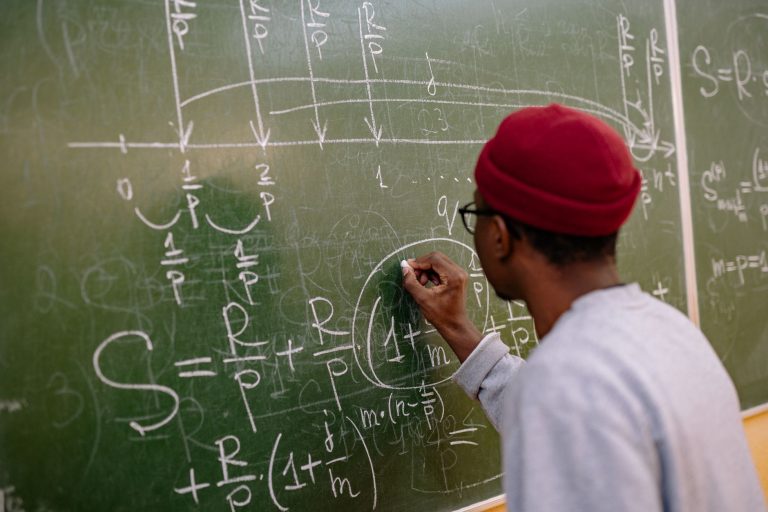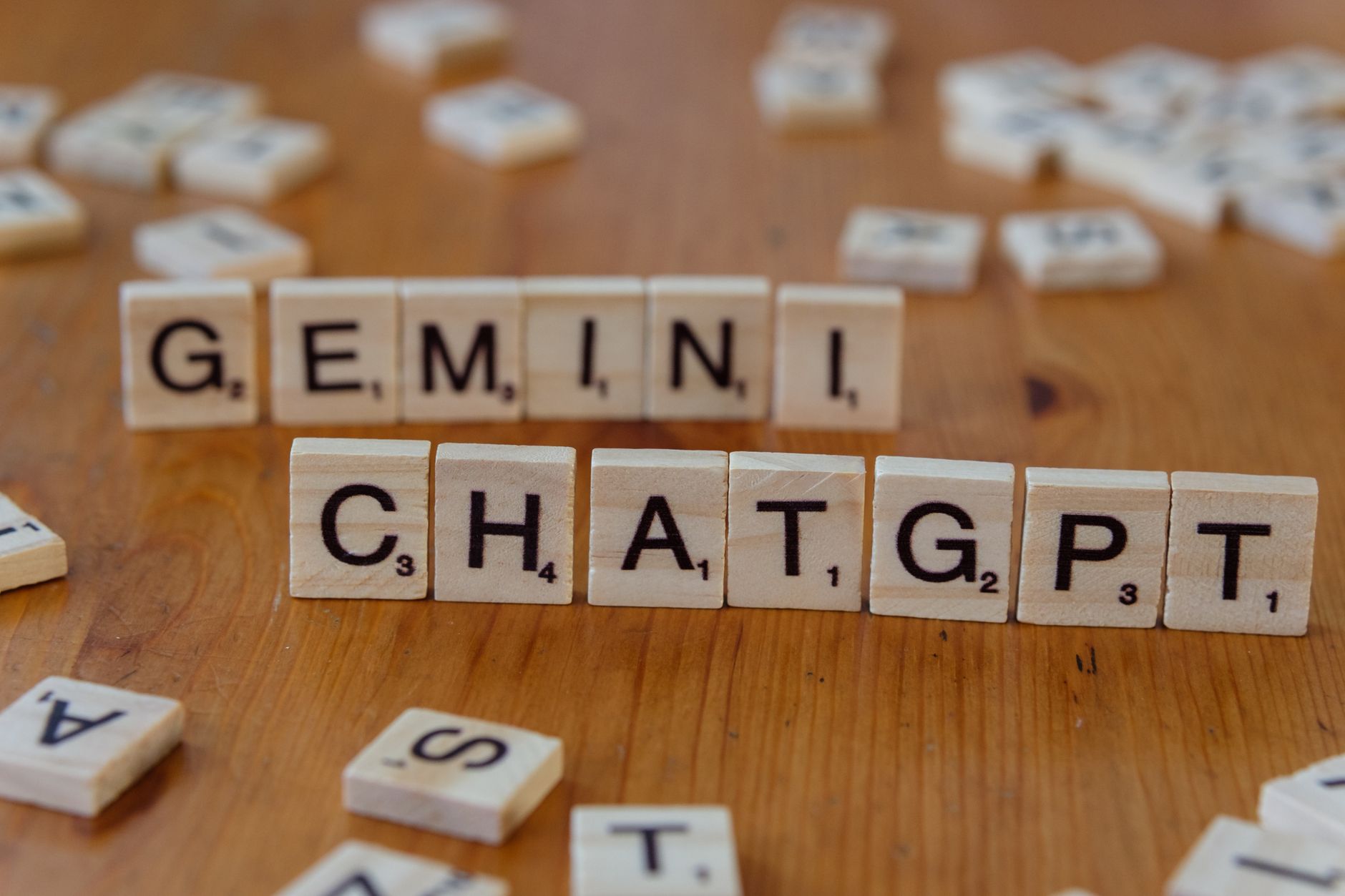
Last semester I kept switching between two browser tabs during a late-night study session, running the same thermodynamics problem through two different AI tools, hoping one of them would actually explain why the entropy formula works, not just spit it out. Neither one fully satisfied me, and that frustration is what led me to build this comparison properly. I ran 5 identical test prompts through both Gemini and ChatGPT, scored each response on accuracy and explanation depth, and tracked exactly where each tool stumbled. If you’re trying to figure out the gemini vs chatgpt debate for science-heavy work, this is the breakdown you’ve been looking for.
Before we get into results, a quick note on method: the 5 prompts covered physics (Newton’s second law application, wave interference), chemistry (balancing a redox reaction, Le Chatelier’s principle), and biology (explaining meiosis II). Each answer was scored out of 10 across two criteria: factual accuracy and explanation depth.
—
The Short Answer (If You Need It Fast)
ChatGPT edges out Gemini in structured explanation and step-by-step breakdowns for STEM problems. Gemini holds its own on general knowledge and real-time information, but when a student needs to understand why an equation works or how a reaction proceeds, ChatGPT’s formatting and reasoning tend to be clearer. That said, neither tool is built specifically for physics, chemistry, or biology at a deep level, and that gap shows up in the test results below.
—
How I Set Up the Test
Five prompts, two tools, same inputs, no tweaking. I pasted each prompt exactly as written into both Gemini and ChatGPT without any system prompt or custom instruction. The goal was to simulate what a student or self-learner would do at 11pm with a deadline the next morning.
Scoring rubric:
- Accuracy (0-5): Is the science correct? Are formulas right? Any errors?
- Explanation Depth (0-5): Does it explain the concept or just give an answer? Does it show working?
Total score per prompt: 10 points. Total possible across 5 prompts: 50 points.
—
ChatGPT: What It Actually Does Well
ChatGPT’s biggest strength in this test was its consistency. Across all five prompts, it never gave a factually wrong answer, and four out of five times it walked through the reasoning in a way that actually built understanding rather than just delivering a result.
On the wave interference question, ChatGPT explained constructive and destructive interference using a path difference argument, set up the formula, and then showed a worked numerical example. That’s the kind of scaffolding that makes a difference when you’re not just looking for an answer, but trying to understand the logic. It scored 8/10 on that prompt.
The redox balancing prompt was where ChatGPT really showed its strength. It identified the half-reactions, balanced them separately, equalized electrons, then combined. Step-by-step, clearly labeled. Score: 9/10.
Where it fell short: the Le Chatelier’s principle question. ChatGPT gave a correct but surface-level answer, explaining the direction of equilibrium shift without connecting it to the underlying thermodynamic reasoning. A student preparing for an advanced exam would need more. Score: 6/10.
ChatGPT final score: 39/50
—
Gemini: Stronger in Some Places, Weaker in Others
Gemini surprised me on the biology prompt. Its explanation of meiosis II was genuinely better than ChatGPT’s, using a cleaner analogy for chromatid separation and connecting the process to genetic variation in a way that felt intuitive. Score: 9/10.
The counterintuitive part is that Gemini, which has access to real-time information and is generally seen as Google’s most capable assistant, actually underperformed ChatGPT on physics prompts specifically. On the Newton’s second law application, it gave the right formula but glossed over the vector component breakdown, which is the part students consistently get wrong. Score: 6/10.
On the wave interference prompt, Gemini provided correct definitions but skipped the worked example entirely. It read more like a textbook glossary than a tutoring session. Score: 6/10.
The redox balancing was decent, following a similar half-reaction approach, but the formatting was inconsistent, with steps not clearly labeled. It works if you already know what you’re looking at, but for someone learning the process, it’s harder to follow. Score: 7/10.
Gemini final score: 35/50
—
Head-to-Head: Where the Gap Actually Shows Up
Here’s the full breakdown across both tools and all five prompts:
| Prompt | ChatGPT Score (/10) | Gemini Score (/10) | Winner |
|---|---|---|---|
| Newton’s Second Law (physics) | 8 | 6 | ChatGPT |
| Wave Interference (physics) | 8 | 6 | ChatGPT |
| Balancing Redox Reaction (chemistry) | 9 | 7 | ChatGPT |
| Le Chatelier’s Principle (chemistry) | 6 | 7 | Gemini |
| Meiosis II (biology) | 8 | 9 | Gemini |
| Total | 39/50 | 35/50 | ChatGPT |
The pattern is pretty clear. ChatGPT wins on physics and most chemistry prompts. Gemini does better when the question leans toward conceptual biology or general life science explanations. Neither tool dominates across the board.
What I didn’t expect: Gemini being weaker on physics specifically. Given how strong Google’s underlying knowledge infrastructure is, I assumed it would handle formula-based reasoning well. In practice, it tended to explain what the physics is rather than how to work through it, which is a meaningful difference for a student preparing for exams.
—
Pricing Reality for Students in 2026
Both tools have free tiers, which matters a lot if you’re a student deciding where to spend your time and money.
ChatGPT’s free tier is limited in usage, and heavier users will bump up against session limits fast, especially during exam season. The paid plan runs around $20/month, which gives access to the most capable version and more consistent performance on complex problems.
Gemini’s free tier is more generous for general use and integrates tightly with Google Workspace, which is useful if you’re already living in Google Docs and Drive. The paid tier costs a similar amount monthly.
For a student doing regular STEM problem-solving, the honest answer is: ChatGPT’s paid plan is worth it if accuracy on worked problems is your priority. If you’re doing broader research, writing, and some science questions, Gemini’s free tier might cover most of your needs. The gemini vs chatgpt 2026 conversation really comes down to whether you need precision or versatility.
—
Frequently Asked Questions
Is Gemini or ChatGPT better for physics homework?
Based on my testing, ChatGPT handles physics problems better, particularly when you need step-by-step worked solutions. Gemini explains concepts well but tends to skip the worked-through math, which is usually what students need most.
Can either tool replace a subject-specific AI solver for chemistry or biology?
They’re useful starting points but not replacements. Both tools occasionally oversimplify, and neither is calibrated specifically for science problem-solving. For deeper subject work, a PhysicsGPT-style tool built around the specific logic of science problems tends to perform more consistently.
Which tool is better for the gemini comparison in terms of exam prep?
For exam prep with real worked problems, ChatGPT’s structured approach scored higher in this test. Gemini is better if you want to understand a concept broadly before drilling into problem-solving. Use both if you can.
Is the free version of either tool good enough for a student?
For occasional questions, yes. For regular STEM problem-solving sessions, you’ll hit limitations pretty quickly on both free tiers. The paid plans are more consistent, especially for multi-step problems.
—
Which Tool Should You Actually Use?
If your work is primarily writing, research, or mixed-subject studying, Gemini’s free tier and Google integration make it a strong everyday tool. The chatgpt review picture looks different for students who need reliable step-by-step science solutions regularly: ChatGPT is the better pick based on this test.
But here’s the honest framing from someone who runs STEM prompts regularly: neither tool is purpose-built for subject-specific AI use cases in physics, chemistry, or biology. They’re general tools being asked to do specialized work, and the seams show. The best gemini alternative for deep science work isn’t really another general-purpose AI, it’s a tool calibrated specifically for how science problems are structured, where the explanation of method matters as much as the final answer. That’s the gap that PhysicsGPT fills for students who find that both of these general tools leave them one step short of actually understanding the material.
—

Rachel Okonkwo is an applied physics researcher and AI STEM tools reviewer with 6 years of experience across academic research and science education. She holds a B.S. in Physics from MIT and specializes in evaluating AI physics solvers for accuracy, formula correctness, and real student usability.